
What ‘The Journey of an African Colony’ demands we finally admit — Bukola Oladunjoye | theyellowwriter.com
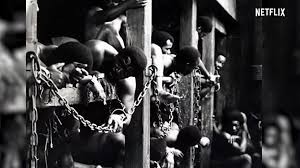
There is a particular kind of anger that comes not from being wronged, but from watching people celebrate the person who wronged them. I felt that anger watching ‘The Journey of an African Colony,’ a documentary written and narrated by Olasupo Shasore, SAN, and produced by Quramo Media. Not because the film surprised me, but because it named, with careful and unflinching precision, a wound I had long sensed but never seen so clearly documented: that Nigerians have inherited a story about themselves written by the people who stole from them — and too many of us are still living inside it.
The documentary traces Nigeria’s history as told by a Nigerian — a distinction that matters more than it should. It confronts, without mercy, the colonial narrative that has quietly embedded itself into how Nigerians understand their own past: the idea, never quite spoken aloud but always somehow present, that before the British arrived, there was chaos, and after them, there was order. That they came and built. That they, in some version of the story we were handed, saved us from ourselves.
They were not heroes in our story. They were villains. And it matters enormously that we say so plainly.
Shasore’s documentary will not let that lie stand. It shows what was already here: trade networks, governance systems, cultural sophistication, architecture of thought and community that did not need to be rescued. And it shows what colonialism actually did — not civilise, but extract. Not develop, but dismantle. The history is in fragments partly because the fragmenting was deliberate. As Shasore notes, to find the full record of Nigeria’s story, one must travel over 7,000 kilometres to London, where the documents are held in institutions built partly on what was taken from the very places the documents describe.
What the film made me imagine — and this is the thought I cannot shake — is what the African story would look like today if it had not been intercepted. Not a utopia. But a continuity. Cultures evolving on their own terms. Economies growing from their own logic. Governance shaped by their own values. We will never know that version of the story, and that not-knowing is itself a kind of grief.
But grief without direction becomes paralysis, and this is where I think the documentary’s most urgent contribution lies. It is not made for history scholars. It is made for builders — for the entrepreneur in Lagos who speaks of ‘investors’ as if foreign capital is the only legitimate kind, for the policymaker in Abuja who measures progress in metrics designed by institutions that have never had Nigeria’s interests at heart, for the young professional who has been taught, quietly and persistently, that the standards of elsewhere are the standards worth meeting. Anyone building for Nigeria needs the perspective this documentary offers. Not as an exercise in bitterness, but as an act of clarity.
Because you cannot build something whole when you are working from a broken blueprint. And the blueprint most of us were handed — about who we are, where we come from, what we are capable of, what we owe and to whom — was written by people whose interest was not our flourishing. To keep building from it is not pragmatism. It is a continuation of the original theft, carried out now by our own hands.
We must stop worshipping the people who designed our diminishment and start building from what we actually are.
Nigeria is not a developing country because it lacks resources, intelligence, or creativity. It is in the condition it is in because the terms of its existence — economic, political, psychological — were set by hands that wanted it to leak value outward, and those terms have never been fully renegotiated. The journey of an African colony does not end when the colonisers leave. It ends when the colonised stop seeing themselves through the coloniser’s eyes.
‘The Journey of an African Colony’ is available on Netflix. Watch it not as an act of nostalgia, but as an act of orientation. The place to start building is always home — but first, you have to know what home actually is.
Bukola Oladunjoye is a writer and research analyst covering African development, literature, and education. She writes at theyellowwriter.com | @theyellowwriter


Leave a Reply